
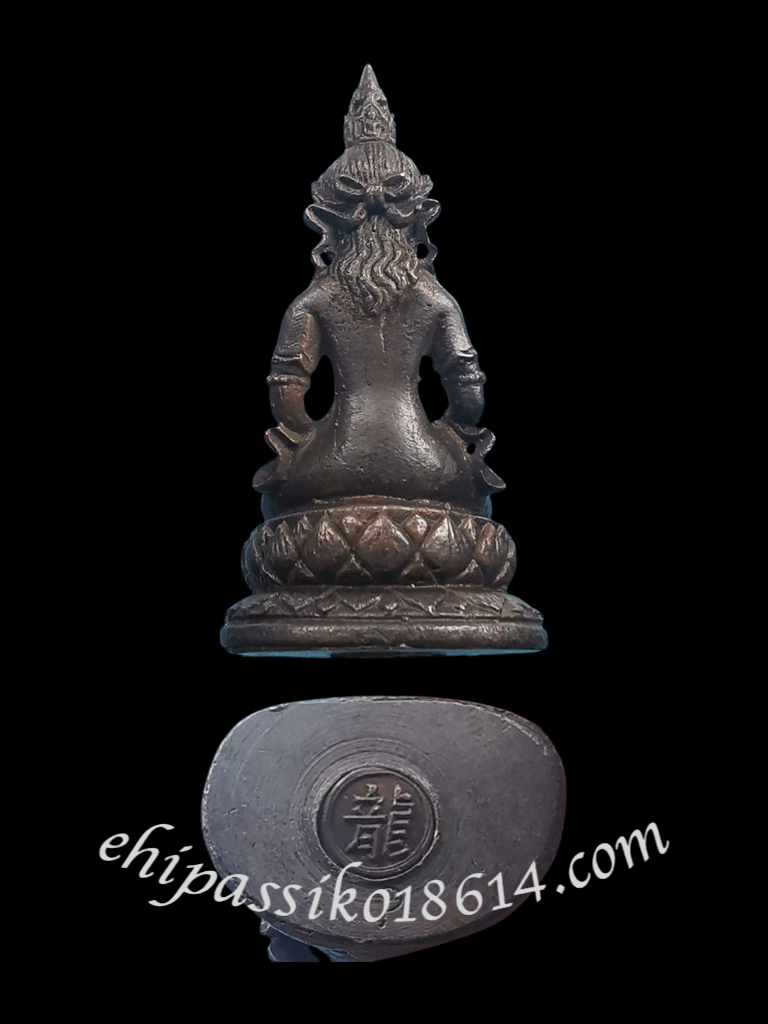
毗卢遮那佛,又称为大毘卢遮那佛或摩诃毗卢遮那佛,是佛教中的重要菩萨之一。其梵语名字Vairocana的意思是“太阳”或“光明遍照”,也被翻译为大日如来或大日觉王。毘卢遮那佛在佛教中通常被视为报身佛或法身佛之一,而释迦牟尼佛则被看作是应身佛。
在佛教的五方佛中,毗卢遮那佛位居中间,是娑婆世界的佛之一。嘉祥吉藏大师在《华严游意》中指出,卢舍那佛即是释迦牟尼佛,印顺法师也根据《华严经》的比较支持这一说法。法身佛毘卢遮那佛居于莲华藏世界(又称密严世界),而天台宗将法身佛称为毗卢遮那,报身佛称为卢舍那。唐密教则将毗卢遮那佛视为密教最大本尊之一。
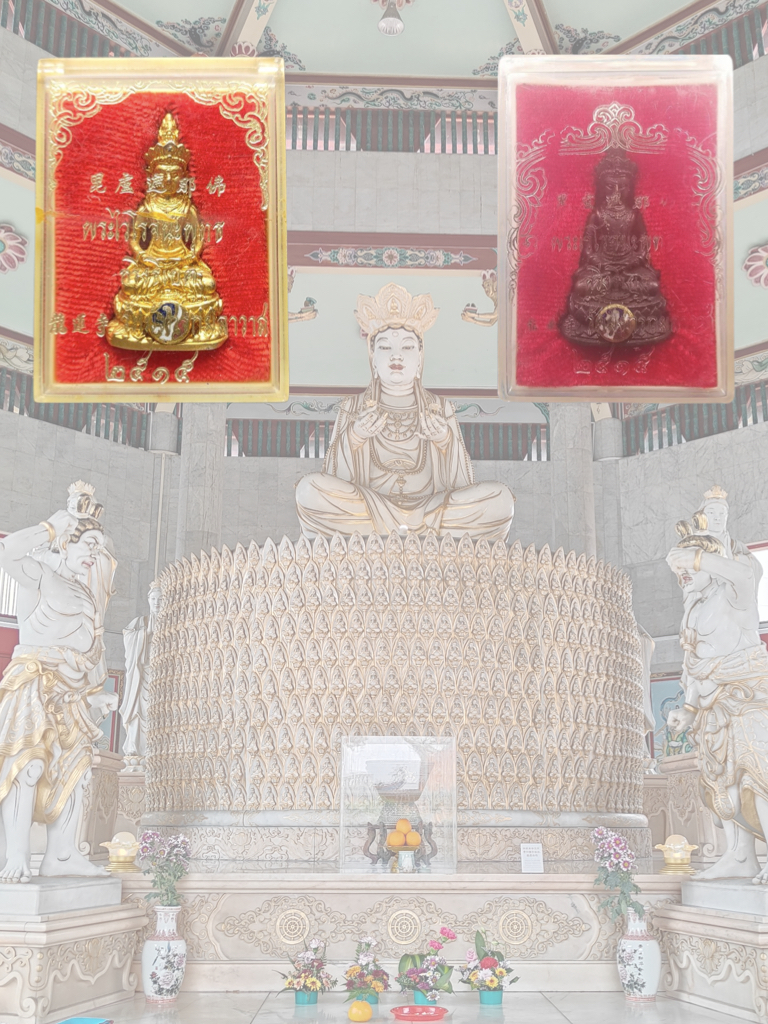
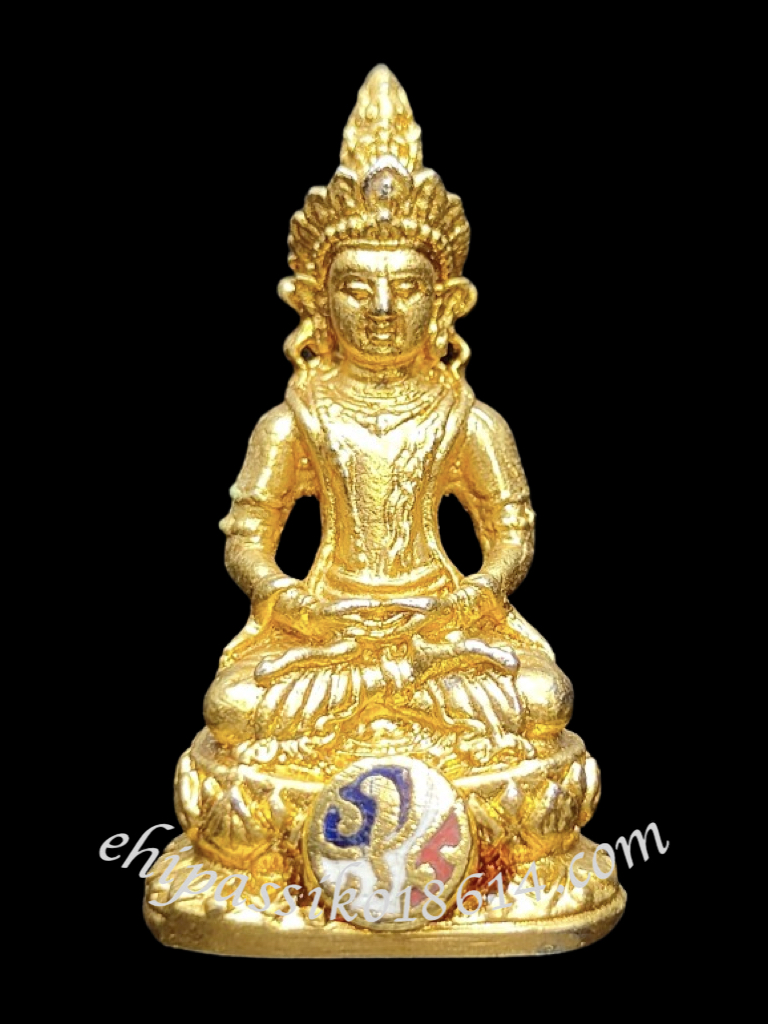
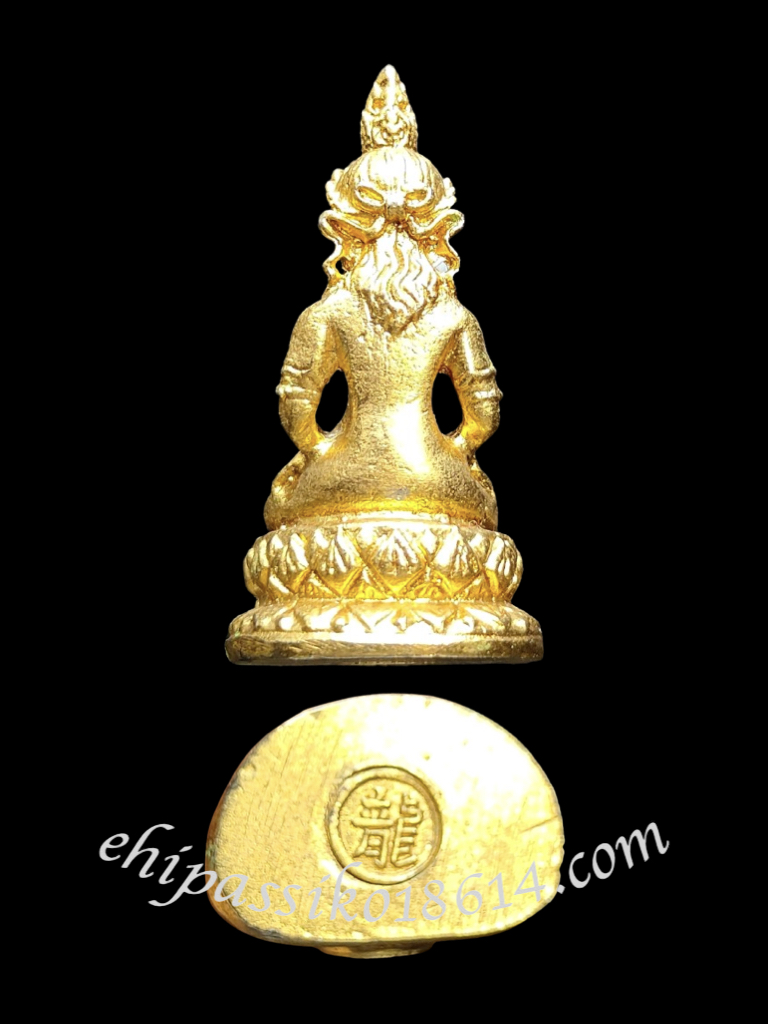
在不同教派中,毗卢遮那佛的形象和手印略有不同。在显宗中,毗卢遮那佛通常头戴五佛冠,身披袈裟,双手结“毗卢印”,坐于千叶宝莲高台上。另一种形象与释迦牟尼佛相似,手印为“说法印”。
在唐密和真言宗中,毗卢遮那佛呈现为菩萨的形象,头戴五佛冠,身着华丽服饰,跏趺坐于千叶宝莲高台上,背后有带火焰的头光。两者之间的区别主要在手印和种子字上,胎藏界形象为“法界定印”,而金刚界形象为“智拳印”。
毗卢遮那佛在佛教中具有重要的地位,其形象和教义在不同的传统中有所发展和演变。他象征着光明和智慧,是众生追求觉悟的榜样,同时也在密教中扮演着至高无上的本尊。通过对毗卢遮那佛的敬仰和修行,佛教徒追求智慧、光明和解脱的目标。
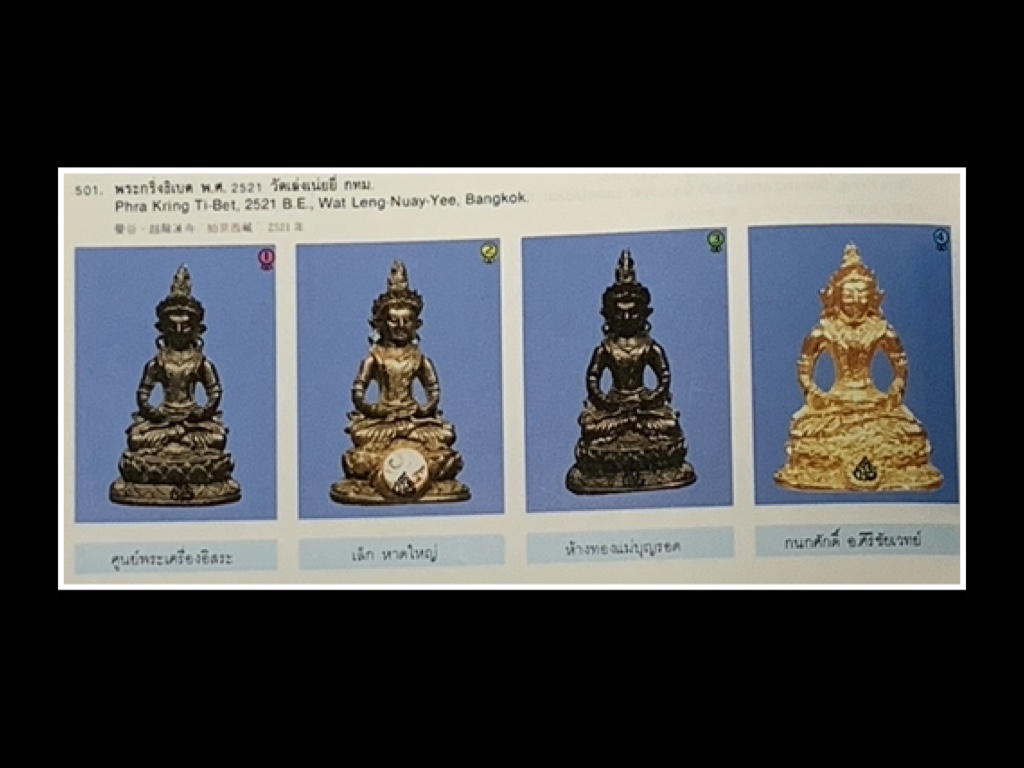
Vairocana Buddha, also known as Great Vairocana Buddha or Mahā-vairocana, is a significant Bodhisattva in Buddhism. The Sanskrit name “Vairocana” means “sun” or “radiant illumination,” and is often translated as Great Sun Tathāgata or King of Great Illumination. Vairocana Buddha is typically regarded as one of the Sambhogakaya or Dharmakaya, while Shakyamuni Buddha is considered the Nirmanakaya.
Among the Five Dhyani Buddhas in Buddhism, Vairocana Buddha occupies the central position and is recognized as one of the Buddhas in the Saha world. Jiaxiang Jizang Master in “The Profound Meaning of the Avatamsaka Sutra” explained that Lushena Buddha is indeed Shakyamuni Buddha. Based on a comparison of Chinese translations of the Avatamsaka Sutra, Ven. Yin Shun also supports this view.
As the Dharmakaya Buddha, Vairocana Buddha resides in the Land of Ultimate Bliss (or Ghanavyūha Akaniṣṭha). In the Tiantai school, the Dharmakaya Buddha is also referred to as Vairocana, while the Sambhogakaya Buddha is known as Lushena (both derived from the same Sanskrit name Vairocana), and Shakyamuni Buddha is considered the Nirmanakaya. In Tang Dynasty Esoteric Buddhism (Tangmi), Vairocana Buddha is venerated as the primary deity, holding a significant position in the Womb Realm and Diamond Realm. Key scriptures such as the “Sutra of the Great Attainment of Vairocana Buddha” and the “Diamond Peak Sutra” are revered.
In terms of iconography, Vairocana Buddha is commonly depicted wearing a crown adorned with five Buddhas, draped in robes, with hands forming the “Vairocana Mudra” (gesture) while seated on a lotus throne. Another representation, similar to Shakyamuni Buddha, displays the “Preaching Mudra.”
In Tangmi and Shingon Buddhism, Vairocana Buddha is visualized as a Bodhisattva, adorned with a five-Buddha crown, exquisite attire, sitting in meditation on a thousand-petaled lotus throne, with a radiant aura of flames behind. The imagery differs between the Womb Realm and Diamond Realm, with the Womb Realm featuring the “Dharmadhatu Mudra” and the Diamond Realm featuring the “Mudra of Wisdom Fist.”
Vairocana Buddha holds a significant position in Buddhist practice, symbolizing illumination and wisdom. Devotees aspire towards enlightenment and liberation through reverence and cultivation inspired by Vairocana Buddha’s teachings and embodiment.
Biography of Chao Khun Po Jaeng (Venerable Pujing):
A Chronicle of His Vows and Actions
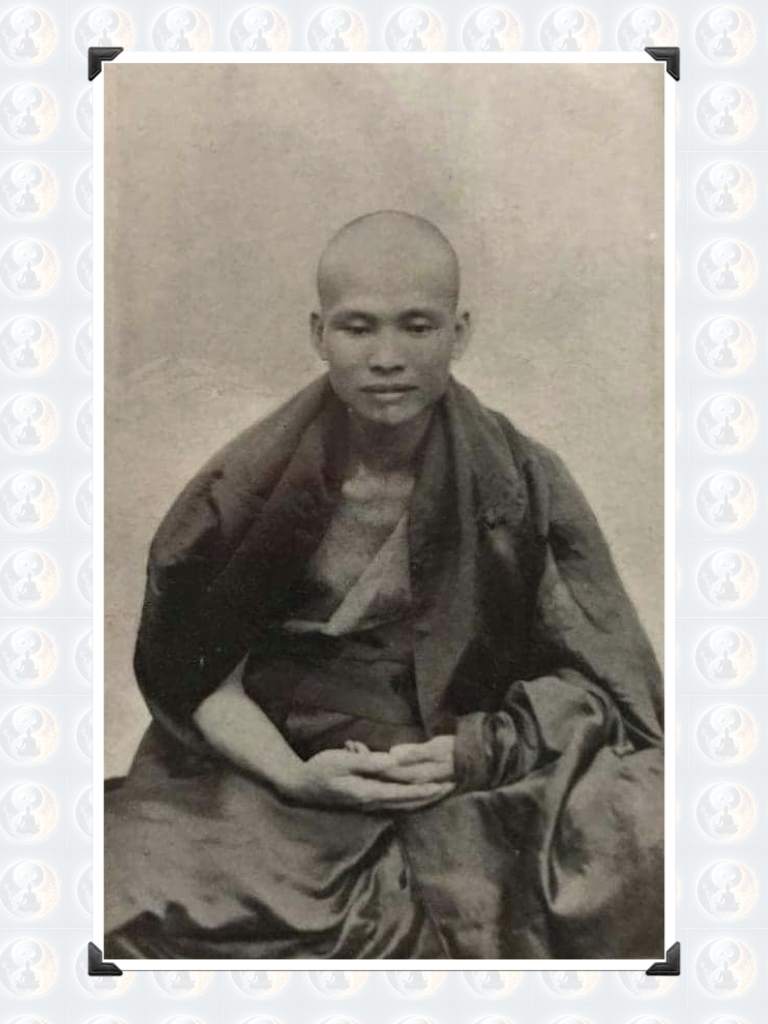
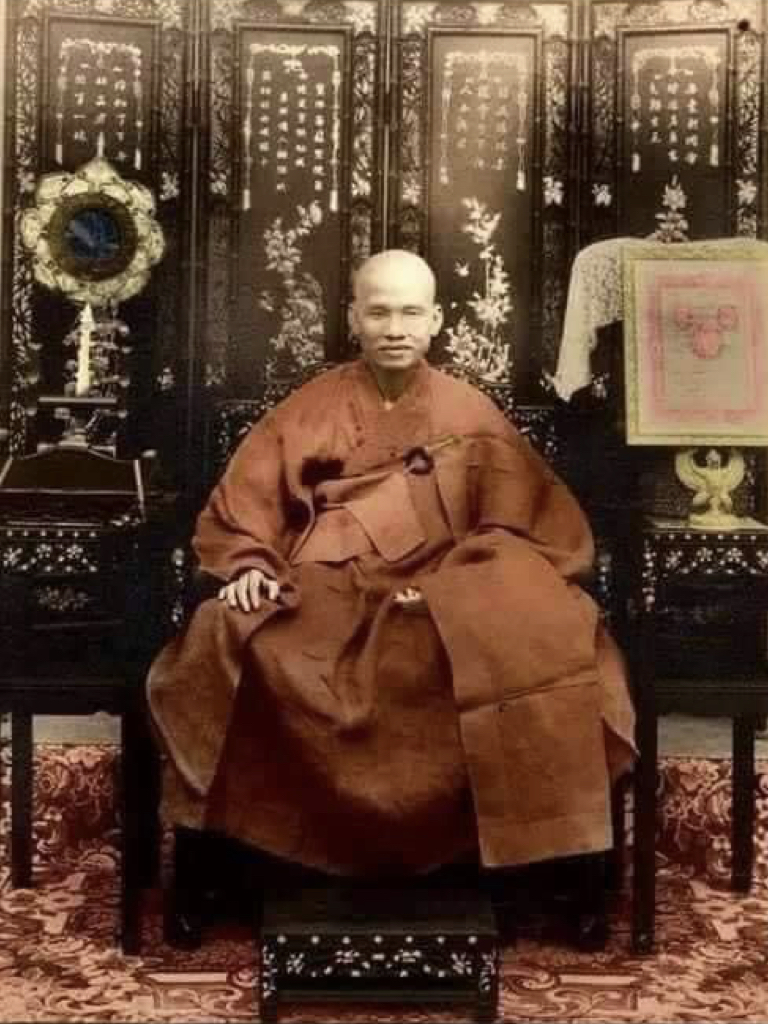
Ven Pujing is a prominent figure in Chinese Buddhism, honored in Thailand as the “Great Elder of the Chinese Sect” and serving as the “Chairman of the Chinese Buddhist Committee of Thailand.” The many temples he established have been inherited by his disciples.
Originally surnamed Huang, Ven Pujing was born on June 16, 1902 (Buddhist Era 2445) in Jieyang County, Guangdong Province, China. He lost his father at a young age and was raised by his mother, who influenced his early exposure to Buddhism. At the age of six, he began studying Confucian texts and Buddhist scriptures.
In 1920 (BE 2463), Ven Pujing moved to Thailand. In 1926 (BE 2469), he ordained in Thailand, taking the dharma name “Neng Chi,” with the courtesy name “Pujing” and the alias “Jiechi.” From 1927 to 1930 (BE 2470–2473), he assisted Ven Longyuan in establishing Qing Shui Temple in Thailand and engaged in intensive Buddhist practice there. In 1931 (BE 2474), he went to the Meijiang Hermitage in Bangkok for further study and maintained connections with the Buddhist community in China. In 1934 (BE 2477), Ven Pujing returned to China, where he received full ordination as a bhikkhu at Baohua Mountain Huiju Temple in Nanjing and practiced there for two years.
In 1936 (BE 2479), Ven Pujing returned to Bangkok and established Lihua Monastery. Between 1937 and 1940 (BE 2480–2483), he continued to expand the monastery and created 84,000 statues of Vairocana Buddha. In 1942 (BE 2485), he went back to China, traveled to Xikang to study Tibetan Buddhism, and became a Vajra Master. After World War II, in 1948 (BE 2491), he returned to Thailand and founded Puren Temple, marking his significant role in the history of Thai-Chinese Buddhism. In 1949 (BE 2492), he returned to Nanjing to receive the lineage of the 18th-generation patriarch of the Vinaya School, Ven Miaorou.
In 1953 (BE 2496), Ven Pujing constructed the “Tibetan Secret” Puthong Stupa in Logang City and rebuilt Ganlu Temple. In 1955 (BE 2498), he expanded Lihua Monastery, attracting many Chinese and Thai followers. In 1957 (BE 2500), he established the Sangha College in Logang City to train bhikkhus. In 1958 (BE 2501), he created a statue of Maitreya Bodhisattva, enshrined at Phra Pathom Chedi in Bangkok. In 1959 (BE 2502), he built the Puren Villa in Kabinburi Province. In 1960 (BE 2503), he renovated Longlian Temple and gilded all its Buddha statues.
In 1961 (BE 2504), Ven Pujing constructed Xianfo Temple and Pumen Baoen Temple in Wansui Province, with the latter becoming the preeminent Chinese temple in Bangkok. In 1964 (BE 2507), he created 84,000 Buddha statues at Baoen Temple. In 1965 (BE 2508), he added several halls to Baoen Temple. In 1966 (BE 2509), he further expanded Baoen Temple with new monk quarters. In 1967 (BE 2510), he built the Dharma Study Hall and monk quarters. In 1968 (BE 2511), he renovated Longlian Temple and created 84,000 Buddha statues. In 1969 (BE 2512), the Great Buddha Hall of Baoen Temple was completed.
In 1970 (BE 2513), Ven Pujing built the Great Buddha Hall at Xianfo Temple in Chunfu and renovated the entire temple. In 1971 (BE 2514), he led a delegation of Thai-Chinese Buddhist monks on a dharma tour to Hong Kong, Taiwan, Japan, and South Korea. In 1972 (BE 2515), he held a grand Buddha statue consecration ceremony at Baoen Temple and conducted a dharma assembly in Hong Kong at the invitation of the Hong Kong Buddhist Association. In 1973 (BE 2516), he toured Singapore and Malaysia, attracting many new followers.
In 1974 (BE 2517), Ven Pujing continued his practice and teaching in Thailand. In 1975 (BE 2518), he established Pude Temple and built the Chinese Elders’ Guesthouse across from Baoen Temple. In 1976 (BE 2519), he renovated Yongfu Temple and held a consecration ceremony. From 1977 to 1981 (BE 2520–2524), he continued to build temples across Thailand and received seven royal titles from the Thai monarchy.
In 1982 (BE 2525), Ven Pujing continued his dharma work in Thailand. In 1983 (BE 2526), he passed on his duties to his disciples. On September 15, 1986 (BE 2529), Ven Pujing peacefully passed away at Baoen Temple at the age of 85. His disciples have carried on his legacy, continuing to promote Buddhism in Thailand and achieving significant accomplishments.
普净上师简介
普净上师是中国佛教界的一位杰出人物,他在泰国被封为“华宗大尊长”,并担任“泰国华宗僧务委员会主席”。他所兴建的诸多佛寺,均已交由弟子继承。
普净上师原姓黄,佛历2445年6月16日出生于中国广东省揭阳县。幼年丧父,由母亲抚养长大,受母亲影响,早年便接触佛法。6岁时,他开始接受儒家教育,并研习佛典。
佛历2463年,普净上师来到泰国。佛历2469年,他在泰国出家,法名“能持”,字普净,别号戒持。佛历2470年至佛历2473年,他协助隆源大师在泰国建立清水寺,并在此潜修佛法。佛历2474年,他前往曼谷的湄江精舍继续修习佛法,并与国内佛界保持联系。佛历2477年,普净上师返回中国,在南京宝华山慧居寺圆具比丘大戒,并在此修行两年。
佛历2479年,普净上师返回曼谷,建立了立化僧舍。佛历2480年至佛历2483年,他继续扩建僧舍,并塑建了八万四千尊毗卢遮那佛像。佛历2485年,他再次回国,前往西康修习密藏,成为密宗“金刚上师”。佛历2491年,抗战胜利后,他回到泰国,创立普仁寺,成为泰国华裔佛教史上的重要人物。佛历2492年,他回到南京接受律宗千华法脉第十八代祖妙柔老和尚的衣钵。
佛历2496年,普净上师在洛梗市建造了“藏密”普同大塔,并重建了甘露寺。佛历2498年,他扩建立化僧舍,吸引了大量中泰信众皈依。佛历2500年,他在洛梗市创建僧伽学院,培养比丘人才。佛历2501年,他塑造了弥勒菩萨像,供奉于泰京佛统大塔。佛历2502年,他在化碧府建造普仁山庄。佛历2503年,他重修龙莲寺,并为全寺佛像装金。
佛历2504年,普净上师兴建了万岁府仙佛寺和普门报恩寺,后者成为泰京华寺之冠。佛历2507年,他在报恩寺塑造了八万四千尊佛像。佛历2508年,他为普门报恩寺建造了多个殿堂。佛历2509年,他继续扩建报恩寺,增建了僧寮等设施。佛历2510年,他建造了学法堂和僧寮。佛历2511年,他重修龙莲寺,并塑造了八万四千尊佛像。佛历2512年,报恩寺大雄宝殿落成。
佛历2513年,普净上师在春府仙佛寺建大雄宝殿,并重修全寺。佛历2514年,他率领泰国华僧弘法访问团访问香港、台湾、日本、韩国。佛历2515年,他在报恩寺举行佛像开光大典,并应香港佛教会邀请举行法会。佛历2516年,他前往新加坡和马来西亚云游,吸引了大量皈依者。
佛历2517年,普净上师在泰国静修传道。佛历2518年,他兴建普德寺,并在报恩寺对面建立华宗长老宾馆。佛历2519年,重修永福寺并举行开光典礼。佛历2520年至佛历2524年,他继续在泰国各地兴建佛寺,并受泰国王朝七次封赠爵位。
佛历2525年,普净上师继续在泰修道宏法。佛历2526年,他将道场交由弟子接掌。佛历2529年,普净上师于9月15日在报恩寺安祥示寂,享年85岁。普净上师的弟子继承了他的遗志,在泰国佛教界继续弘扬佛法,取得了显著成就。