

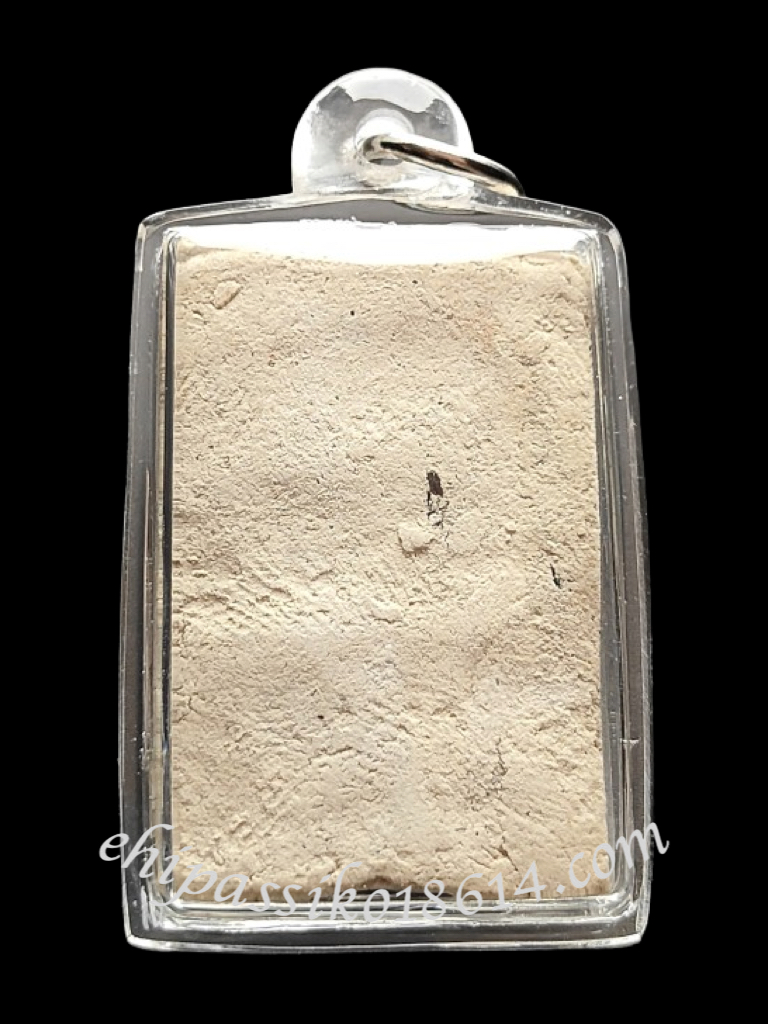
Phra Somdej Sappanyu – The King of Thai Amulets
Crafted from sacred fragments of legendary Bang Khun Phrom Somdej, this rare amulet carries the timeless Dhamma lineage of Wat Rakang and Bang Khun Phrom. A perfect lifelong protector and a collector’s treasure, its value and prestige are unmatched.
Phra Somdej Sappanyu, also known as the Somdej of Wat Pho Man, was created under the supervision of the great Chinese Mahathera Ven. Pujing (普净上师). He was the former abbot of Wat Pho Man Khunaram in Bangkok.
Ven. Pujing was a highly respected monk of Chinese heritage who devoted his life to spreading the Dhamma. Upon his passing, his body did not decay, but merely dried naturally—an extraordinary sign of his spiritual attainments that drew deep reverence from devotees.
Creation of Phra Somdej Sappanyu
The Sappanyu batch was produced as the fourth series of amulets consecrated by Ven. Pujing in B.E. 2502 (1959). At that time, Field Marshal Praphas Charusathien presented him with a large quantity of sacred powder taken from the reopened chedi of Wat Mai Amataros (commonly known as the Bang Khun Phrom Chedi).
This powder consisted of broken and damaged Bang Khun Phrom Somdej amulets—originally crafted by the legendary Somdej Phra Buddhacarya (Toh Prommarangsi) in the 19th century. In total, eight large sacks of these fragments were offered, with more later obtained upon Ven. Pujing’s request. Upon realizing the sacred powders were indeed the original relics of Somdej Toh, he exclaimed in awe:
“No wonder their spiritual power is so extraordinary!”
The purpose of creating these Sappanyu Somdej was to distribute them to military and police officers stationed along the Thai border, as a source of both protection and blessings.
Meaning of “Sappanyu”
The term Sappanyu (สัพพัญญู) in Thai means “omniscient” or “all-knowing”, referring to one who understands the heavens, the earth, and the past, present, and future. Within Buddhist tradition, the word directly refers to the Buddha himself—the fully enlightened one endowed with supreme wisdom, teacher of both gods and men.
Thus, the naming of this batch symbolizes not just a sacred creation, but also a reflection of the Buddha’s boundless wisdom and compassionate guidance.
The Thai collectors’ magazine “Spirit” once featured Ven. Pujing and this amulet in two consecutive issues, praising both the rich sacred composition and the historical importance, regarding the Sappanyu as an artifact of significant cultural and religious value.
Characteristics and Appearance
The obverse of the Sappanyu amulet depicts a Buddha image in Chinese artistic style, seated in the Mara Vichai (subduing Mara) posture, upon a double-layered lotus base, framed within a square border.
The reverse is mostly plain, though some pieces bear a stamped inscription reading:
“Somdej Sappanyu, 1st Batch, B.E. 2502, Wat Pho Man Khunaram.”
The ink colors vary between purple and pink.
What distinguishes this series most is its exceptionally high content of Bang Khun Phrom Somdej powder. Unlike later creations (such as the well-known Bang Khun Phrom B.E. 2509 batch), the Sappanyu contains an unusually dense concentration of these holy fragments. In many pieces, coarse and unground powder granules are still visible, highlighting the material’s genuine antiquity.
As this was one of the early experimental productions of Wat Pho Man, many amulets were hand-pressed by monks and novices rather than by professional mold-makers. Consequently, their external appearance may lack refinement and fine detail, leading to limited popularity at the time. However, this simplicity also preserved the purity of the sacred materials and blessing.
Historical Context and Significance
In B.E. 2500 (1957), the chedi at Bang Khun Phrom was opened, revealing a large cache of Somdej amulets created by Somdej Toh—some intact, others fragmented. Two years later, Wat Pho Man was entrusted with a substantial portion of these broken relics. By transforming them into the Sappanyu series, Ven. Pujing preserved their sacred essence and extended their protective power into a new generation of amulets.
For this reason, the Sappanyu Somdej is often regarded as “the Somdej amulet with the highest proportion of Somdej Toh’s original Bang Khun Phrom powder.” Unlike some later batches where old powder was sprinkled lightly on the surface, here it served as the core base material of construction.
Collectibility and Value
Today, the Sappanyu remains one of the most undervalued treasures in the Somdej lineage. Despite containing unparalleled amounts of authentic Somdej Toh powder, its market price has long stayed within reach of younger collectors, earning it the nickname “the youth-priced jewel.”
Unlike the B.E. 2509 Bang Khun Phrom Somdej, which is heavily counterfeited and commands high prices, the Sappanyu still enjoys clarity of provenance, absence of widespread forgeries, and a direct historical connection to the revered Somdej Toh.
Conclusion
The Phra Somdej Sappanyu (B.E. 2502) of Wat Pho Man is a unique and deeply significant amulet. Crafted under the guidance of Ven. Pujing, its core material is composed almost entirely of fragments of Somdej Toh’s Bang Khun Phrom amulets.
For devotees and collectors seeking an authentic connection to Somdej Toh’s sacred lineage—yet finding Wat Rakang or Bang Khun Phrom originals increasingly beyond reach—the Sappanyu stands as one of the most complete, accessible, and spiritually potent alternatives.
It rightfully holds its place alongside the great Somdej lineages of Wat Rakang, Bang Khun Phrom, and Wat Ket Chaiyo, carrying forward both the sacred essence and the timeless wisdom of Thailand’s most venerated Buddhist heritage.
崇迪萨潘优佛牌(波曼寺 · 佛历 2502 年)
崇迪萨潘优佛牌,又称 波曼寺崇迪佛,由中国大德高僧 普净上师(法号波净 / 波觉)主持制作。他是泰国曼谷 波曼昆纳喃寺(普门报恩寺) 的前任住持。上师一生弘法无数,圆寂后肉身竟不腐,只是自然干缩,令人无不敬仰。
此批佛牌为 第四期作品,制作于 佛历 2502 年(公元 1959 年)。当时泰国政要 巴叻帕·贾鲁沙提安元帅 将从 新庙阿玛塔洛寺(Wat Mai Amataros,俗称曼坤蓬佛塔) 所开启佛塔中获得的旧粉赠予普净上师,用于铸造佛牌,分发给边境军警官兵。
这些圣粉原为 崇迪曼坤蓬佛牌,一共有八大麻袋,因年代久远不少已碎裂。普净上师得之,感叹佛力非凡,并令弟子再次前往新庙请求增供。后来得知,这些粉末正是由 阿赞多祖师(Somdej Phra Buddhacarya Toh Prommarangsi) 亲手所制,上师遂赞叹道:“难怪,其佛力如此殊胜!”
名称寓意与佛教文化
此佛牌被命名为 “萨潘优”。在泰文中,萨潘优意为 “无所不知”,即上知天文、下知地理,能洞悉过去、现在与未来之人。在佛教中,萨潘优是对佛陀的尊称,象征着具备大智慧的觉者、天人之师。
泰国佛牌权威杂志 《Spirit》 曾连续两期介绍普净上师的生平与这批萨潘优崇迪佛牌,并高度评价其圣料与工艺,认为其不仅具有极高的收藏价值,更承载了深厚的佛教文化意涵。
外观与特点
佛牌正面为 中式佛像造型,佛陀结跏趺坐,施降魔印,座下双层莲花台,并置于方形框架中。背面大多平整,但部分佛牌背面会盖有印章,注明:“崇迪萨潘优,第一期,佛历 2502,波曼昆纳喃寺”印泥分为紫色与粉色两种。
此批佛牌最大的特点在于,主要圣料为曼坤蓬佛牌碎粉,比例极高,几乎每尊佛牌中都能看到未经完全研磨的旧粉颗粒,带有独特的年代质感。相比后来佛历 2509 年的邦坤蓬佛牌,其含粉量更为庞大,可谓浓度最纯粹的一支法脉。
由于制作时间尚属早期,佛牌多由僧侣与沙弥徒手压制,工艺经验不足,成品外观略显粗糙,因而当时未受大众追捧。然而,正因如此,其佛力与圣料更显纯粹。
历史背景与价值
佛历 2500 年(1957 年),曼坤蓬佛塔开启,发现了由 阿赞多祖师 亲制的大量崇迪佛牌,其中既有完整之作,也有不少残缺。两年后(2502 年),波曼寺得到大量残缺佛牌圣粉,于是以其为核心圣料,制成了这一批 萨潘优崇迪佛牌。
因此,萨潘优几乎可称为 “含曼坤蓬阿赞多圣粉比例最高的崇迪佛牌之一”。这并非仅在佛像表面洒粉,而是将圣粉直接作为主要构成材料,成就了极为珍贵的佛教遗产。
时至今日,萨潘优佛牌仍属于价格亲民的佛牌,但其佛力殊胜,被视为难得的 “青年价珍宝”。因材料确凿、来源清晰,且市面鲜见仿品,故极具收藏与供奉价值。
总结
崇迪萨潘优佛牌(佛历 2502 年),以 曼坤蓬佛牌圣粉 为核心,结合了普净上师的修持与佛教智慧,堪称与 瓦拉康崇迪、曼坤蓬崇迪、给财优崇迪 同等佛力的圣物。
对于渴望供奉一尊真正蕴含 阿赞多祖师圣料,却难以获得瓦拉康或邦坤蓬原版佛牌的人而言,萨潘优佛牌无疑是最圆满且值得托付的一尊。